
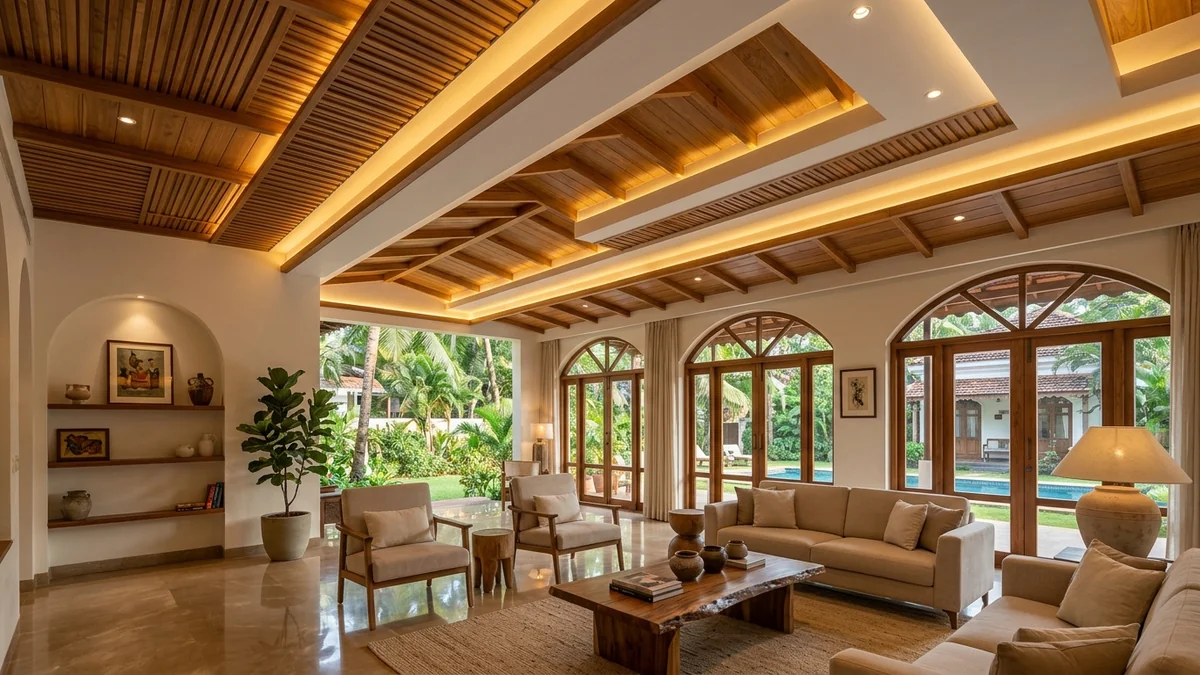
Exploring the various false ceiling options for Goan homes is about much more than adding warm LED ambient cove lights. In coastal South Goa, ceilings face aggressive environmental challenges: heavy monsoonal humidity that softens standard plaster, condensation above split air conditioners, and salt-laden maritime air that corrodes cheap metal suspension wires.
Whether you are renovating a heritage Portuguese villa in Margao, an apartment in Vasco, or building a new home in Curchorem, your ceiling material determines thermal insulation, sound dampening, and maintenance ease. In our 21+ years executing turnkey carpentry and interior contracting, we work with three primary ceiling media: Gypsum Board, PVC Panels, and Solid Wood / Timber Rafters. Here is an honest appraisal of how each performs in Goa.
1. Gypsum Board Ceilings: Seamless Modern Elegance
Gypsum false ceilings are built using pre-manufactured plasterboard sheets (typically 12.5mm thick) screwed onto a concealed grid of galvanized iron (GI) metal channels suspended from the RCC slab.
- Aesthetic Appeal: Completely seamless monolithic finish. When jointed with specialized paper tape and jointing compound, gypsum yields a flat, flaw-free surface that can be painted in any color, accommodating concealed LED profile lights and magnetic track lighting.
- Thermal Insulation: Gypsum contains chemically bound water molecules that offer excellent fire resistance and help keep rooms cooler under hot April sun.
- The Goan Humidity Consideration: Standard regular gypsum boards absorb moisture if an overhead roof slab leaks during monsoon downpours. In coastal South Goa, experienced contractors install Moisture Resistant (MR) Gypsum Board (identifiable by its green paper face) treated with silicone water repellents to prevent sagging.
2. PVC Ceiling Panels: 100% Waterproof Resilience
Polyvinyl Chloride (PVC) ceiling panels are hollow-core interlocking tongue-and-groove planks, available in widths of 200mm to 300mm with printed wood-grain, marble, or ultra-matte solid finishes.
- Waterproof Performance: PVC is 100% impervious to water. Even if a roof tile cracks during a July cyclone and rainwater pools on top of the ceiling, PVC will not rot, swell, or stain.
- Zero Maintenance: Termites, borers, and mold cannot consume PVC. It never needs repainting—simply wipe clean with a damp sponge.
- Ideal Locations: Covered sit-outs (balcão), balconies, bathrooms, and utility kitchen washrooms across Colva and coastal villages.
- Limitations: Plastic aesthetic may not match luxury formal living rooms, and PVC becomes brittle if exposed to direct prolonged outdoor UV sunlight.
3. Wooden Rafters & Wood Ceilings: Timeless Goan Prestige
Timber ceilings echo the grand heritage of Goan Portuguese villas, where exposed roof rafters and polished timber planks evoke warmth, craft, and architectural nobility.
- Materials Used: Natural Burma or CP Teak rafters, seasoned local Matti wood, or calibrated marine plywood surfaced with natural teak veneers.
- Visual Impact: Adds extraordinary acoustic warmth and architectural prestige to double-height living rooms and master suites. Perfect for integrating warm 3000K spotlight pendants.
- Craftsmanship & Treatment: Timber must be vacuum-pressure treated against termites and sealed with polyurethane (PU) matte coats to handle seasonal air dampness. Read our guide on wooden false ceiling designs in Goa.
4. Material Comparison Table: Gypsum vs PVC vs Wood
| Ceiling System | Approx. Rate (Per Sq.Ft Installed) | Monsoon Water Tolerance | Best Suited Room in Goa |
|---|---|---|---|
| Gypsum Board (Moisture Resistant MR) | ₹115 – ₹160 / sq.ft | ⭐⭐⭐⭐ (Resists humid air) | Living rooms, bedrooms, cove profile lighting |
| Interlocking PVC Ceiling Planks | ₹120 – ₹170 / sq.ft | ⭐⭐⭐⭐⭐ (100% Waterproof) | Bathrooms, covered verandahs, balconies |
| Natural Teak Wood Rafters / Slats | ₹350 – ₹750 / sq.ft | ⭐⭐⭐⭐⭐ (When PU sealed) | Dining areas, villa living rooms, entrance foyer |
| Hybrid Gypsum with Wood Inset Borders | ₹220 – ₹380 / sq.ft | ⭐⭐⭐⭐ (Balanced performance) | Master bedrooms, formal living spaces |
5. Contractor Installation Secrets for Coastal Goa
Installing a false ceiling in Goa requires specific technical precautions to prevent sagging and rusted framework:
- Insist on 0.5mm+ Galvanized Metal Sections: Cheap 0.3mm tin framework rusts rapidly when coastal salt air enters ceiling plenums. We use certified GI channels (such as Saint-Gobain Gyproc) with heavy zinc galvanization.
- Tighten Channel Spacing to 400mm: While dry city guidelines permit 600mm spacing between intermediate ceiling channels, Goan humidity increases board weight. Reducing spacing to 400mm eliminates any chance of long-term sagging.
- Always Insulate AC Refrigerant Lines: Un-insulated copper AC pipes inside false ceilings generate condensation that drips onto the board below, creating unsightly brown water stains. We double-sleeve all refrigerant tubing in closed-cell nitrile rubber foam before closing the ceiling.
View our civil and false ceiling projects on our portfolio page or request an on-site ceiling estimate via our contracting services.
Frequently Asked Questions
Upgrade Your Ceiling with Master Craftsmanship
Whether you want seamless moisture-resistant gypsum cove lighting or magnificent solid teak rafters, consult with Sant Mistri for precise on-site leveling and durable framework.
 Chat on WhatsApp