Introduction
In luxury Portuguese-Goan estates and contemporary multi-level villas, the staircase is far more than a functional link between floors—it is the grand architectural centerpiece of the home. A bespoke, handcrafted wooden staircase railing adds warmth, grandeur, and an undeniable sense of craftsmanship that mass-produced metal railings cannot replicate.
At Sant Mistri Carpenter, our master woodturners and carvers have designed, fabricated, and installed iconic staircase balustrades across South Goa for over 21 years. Here is our guide to choosing the perfect wooden staircase railing design for your home.
1. Iconic Wooden Staircase Railing Styles in Goa
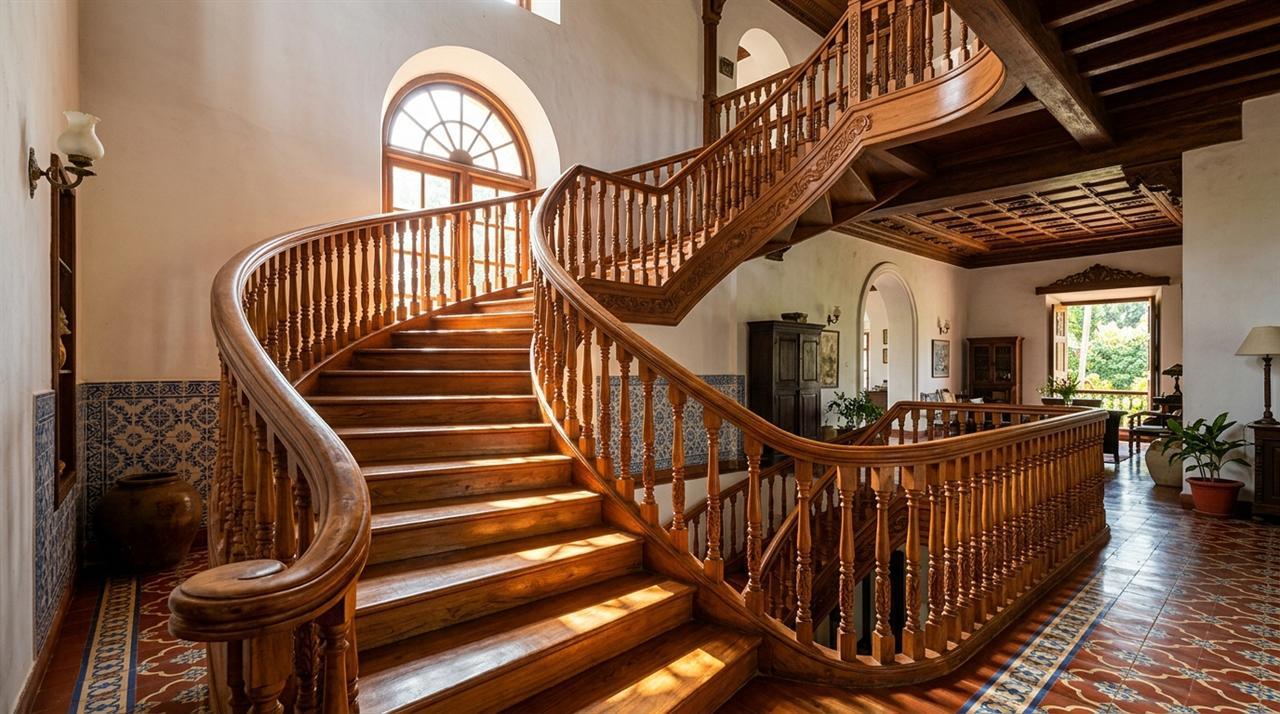
A. Traditional Indo-Portuguese Turned Balusters
The hallmark of heritage Goan homes in Loutolim and Salcete. Features intricately lathe-turned vertical spindles, ornate carved newel master posts, and a continuous curved solid Teak handrail finished in warm golden walnut or dark mahogany polish.
B. Modern Contemporary Minimalist (Wood + Toughened Glass)
For modern coastal villas, 12mm clear toughened glass panels are capped with a sleek, minimalist wooden top handrail (grooved to slot directly over the glass). This design provides complete safety while maintaining uninterrupted sightlines and light flow across open living rooms.
C. Sleek Horizontal Slat & Geometric Railings
Clean parallel horizontal wooden slats paired with matte black metal uprights offer a warm, Scandinavian-inspired modern look that complements open-tread cantilevered staircases.
2. Best Wood Species for Staircase Handrails & Balusters
Because staircase handrails experience constant touch and high friction, choosing a hard, stable wood species is crucial:
- First-Class Teak Wood (Sagwan): The gold standard. Dense, naturally oily, smooth to the touch, and completely resistant to woodborers and seasonal warping.
- Sheesham (Indian Rosewood): Renowned for its dramatic, dark marble-like grain streaks and exceptional hardness.
- Mahogany / Red Cedar: Rich reddish undertones, excellent workability for intricate heritage floral carvings on newel posts.
3. Structural Safety & Building Code Considerations
A beautiful staircase must be built with uncompromised structural integrity:
- Standard Railing Height: Handrails must stand between 34 to 38 inches (86cm to 96cm) above the stair tread nosing for safe, comfortable adult grip.
- Baluster Spacing (The 4-Inch Rule): The clear space between vertical balusters must not exceed 4 inches (10cm) to prevent young children or pets from slipping through.
- Heavy-Duty Subfloor Anchoring: Newel posts are deep-anchored into concrete stringers using high-tensile threaded steel rods concealed under decorative wooden base plates.
4. Polishing & Long-Term Maintenance
To preserve the rich luster of your wooden handrail against hand oils and coastal humidity:
- Apply a high-durability Polyurethane (PU) Matte or Semi-Gloss Sealant to protect against sweat and friction.
- Wipe the handrail weekly with a dry microfiber cloth; apply natural beeswax or wood polish once every 6 months to nourish the timber grain.
Conclusion
A custom-built wooden staircase railing elevates your interior architecture, transforming ordinary stairs into a stunning artistic statement that lasts for generations.
Commission your custom staircase railing with South Goa's trusted master carpenters. Call Sant Mistri Carpenter at +91-9284257709 to review our portfolio and schedule a site measurement.
Recommended Woodworking Guides & South Goa Service Areas
Before finalizing your carpentry plans, explore our technical woodworking guides: consult our Types of Wood for Furniture and read the in-depth Goan Wood Guide.
Sant Mistri provides master craftsmanship, on-site measurements, and custom furniture installations across South Goa, including dedicated coverage in Quepem and Cavelossim.