
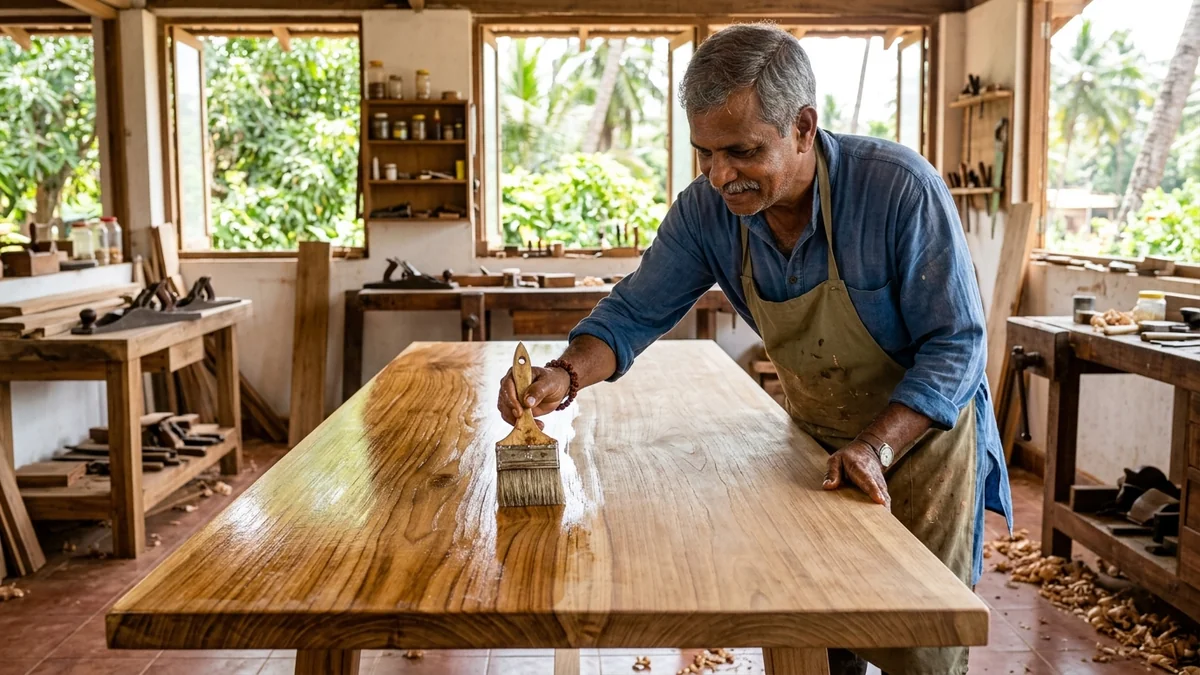
Effective termite protection for wooden furniture in Goa is not a luxury—it is an absolute necessity for protecting your hard-earned investments. South Goa's warm, humid red laterite soil provides the ideal ecosystem for subterranean termites (Coptotermes formosanus) and wood-boring powder-post beetles (Lyctidae). When four months of relentless monsoon rains soak building masonry, wood cellulose softens, creating an irresistible feeding ground for these timber pests.
Too many homeowners in Margao, Curchorem, and coastal villages wait until a chair leg snaps or a hollow wardrobe door caves in before taking action. Having spent over 21 years repairing antique Portuguese villa timber and building custom cabinetry across South Goa, I can tell you that termites can be prevented and permanently stopped if you understand how they attack. Here is the master craftsman guide to protecting your home woodwork.
1. The Two Main Enemies: Subterranean Termites vs Powder-Post Borers
Homeowners often confuse termites with borers, but their biology, damage patterns, and treatments are fundamentally different:
- Subterranean Termites (Deemak): Termites live in vast underground colonies. They invade homes through hairline foundation cracks and laterite wall cavities, building protective earthen "mud tubes" to maintain continuous moisture. They devour wood from the interior outward, leaving the outer paint or laminate veneer intact until the structure hollows into a paper shell.
- Powder-Post Borers (Ghun): Borers are small flying beetles that lay microscopic eggs into open timber pores. When larvae hatch, they tunnel through the wood for up to two years, leaving distinct 1mm to 2mm circular pinholes and ejecting mounds of ultra-fine, talcum-like yellow wood dust (frass) onto your floor.
2. Building the Defense: Core Treatment During Carpentry
The most permanent termite protection happens on the workbench before a piece of furniture is ever assembled inside your home:
- Pressure CCB Treatment: Certified IS:710 Marine Plywood is vacuum-impregnated with Copper-Chrome-Boron (CCB) chemicals, making it chemically poisonous to termites while completely safe for household occupants.
- Anti-Termite Chemical Primer: Before laminating or painting raw timber, we saturate all six sides with penetrating oil-based termiticides (such as Chlorpyrifos or Imidacloprid solutions) diluted in mineral spirits. This chemical penetrates 3mm to 5mm into the wood pores, creating a barrier that borer larvae cannot penetrate.
- Eliminating Sapwood: When crafting solid wood furniture, seasoned carpenters carefully trim off the outer white sapwood rings. Termites easily digest sapwood, whereas dark, mature teak heartwood contains natural repellent resins. Read our Goan timber guide for wood grain details.
3. How to Treat Active Infestations in Existing Furniture
If you already notice mud tubes or wood powder in your home, do not panic and do not reach for standard aerosol bug sprays. Surface sprays only scatter the worker insects, driving them deeper into adjoining walls.
Follow this professional carpenter remediation method:
- Isolate and Vacuum: Move the affected furniture piece away from masonry walls. Vacuum all loose frass dust and scrape down exposed mud tunnels.
- Syringe Injection: Using a medical metal-needle syringe, inject undiluted oil-based anti-termite chemical directly into every visible pinhole until liquid seeps out of neighboring pores.
- Seal the Pinholes: After chemical absorption, pack the exit holes with beeswax, wood filler mixed with termiticide, or shellac paste to suffocate any remaining larvae inside the gallery.
- Apply a Protective Surface Envelope: Sand down degraded polish and seal the entire piece with two coats of polyurethane (PU) wood lacquer to lock out atmospheric humidity.
4. Comparison: DIY Remedies vs Professional Chemical Barriers
| Treatment Approach | Effectiveness Against Goa Termites | Lifespan of Protection | Best Suited For |
|---|---|---|---|
| Professional Chemical Injection (Imidacloprid) | ⭐⭐⭐⭐⭐ (Kills whole colony) | 5–10 Years | Active infestations, built-in wardrobes, door frames |
| Pre-Lamination Oil Barrier Primer | ⭐⭐⭐⭐⭐ (100% Prevention) | 15+ Years | New custom cabinetry, marine plywood wardrobes |
| Polyurethane (PU) Moisture Sealant Coat | ⭐⭐⭐⭐ (Blocks egg laying) | 5–7 Years | Antique dining tables, solid wood chairs, beds |
| Kerosene / Neem Oil Spray (DIY) | ⭐ (Temporary surface repellent) | 2–4 Weeks | Minor temporary surface deterrence only |
5. Five Golden Rules to Keep Furniture Termite-Free During Monsoons
Termites cannot survive without water. If you eliminate moisture pathways in your home, termites will avoid your living space entirely:
- Maintain a 50mm Wall Air Gap: Never push wooden wardrobes, headboards, or bookshelves flush against exterior walls in South Goa. Leave a 2-inch gap so air can circulate and prevent damp laterite transfer.
- Install PVC or Metal Furniture Glides: Ensure bed legs and wardrobe plinths rest on rubber or PVC feet, preventing wood from sitting directly on damp tiled floors after mopping.
- Conduct an Annual Pre-Monsoon Audit in May: Inspect dark corners, under-sink carcasses, and baseboard skirting every April or May before the first rains arrive.
- Never Store Raw Cardboard Boxes Near Wood: Cardboard is pure raw cellulose. Damp cardboard boxes stored under beds or inside wardrobes are the #1 magnet attracting subterranean termites into Goan homes.
Read our specialized advice on protecting wooden furniture during monsoons or contact our repair and polish team for on-site treatment across Margao and South Goa.
Frequently Asked Questions
Protect Your Valuable Wooden Furniture Today
Don't let termites chew away your valuable woodwork. Contact Master Carpenter Sant Mistri for on-site timber inspection, professional borer syringe treatment, and durable PU restoration polish.
 Chat on WhatsApp